

What does it mean to be a caregiver?
Many associate the concept with helping professions, such as nurses, CNAs and other such staff at retirement homes, hospitals, and childcare centers. While it is true that caregiving does entail providing care for children with special needs, elderly family members or friends, or family members living with a disability or chronic illness, it often escapes notice that this role is often not a paid or professional role. According to the CDC, there were more than 53 million unpaid caregivers in the United States in 2020, up from 43.5 million in 2015.
I make this distinction only to emphasize that most of the time, employees are able to leave their work at work, and disconnect from their professional self during their personal time and focus on their own lives, self-care and needs. When 1 in 5 adults are caregivers for another person, it stands to reason that their own needs take a back seat. When this neglect of self happens for too long, burnout becomes a very likely eventuality.
The many hats of caregivers
Many of us wear many hats in our day-to-day lives. Maybe you have a family, making you a parent, a spouse, or some combination thereof. Maybe you work for a company, or maybe you are an entrepreneur. Maybe you are a student. Under these hats, maybe you also participate in clubs, organizations, sports, or extracurricular activities. Maybe you are an intern, or you volunteer in your community. Whatever your interests are, we all make an effort to allocate time in our days for the things that are important to us, beyond those responsibilities necessary for maintaining our basic needs.
In a perfect world, those priorities would not change when a loved one falls ill or becomes disabled, but we do not live in a perfect world. In most cases, the needs of our loved ones change over time, whether due to aging and their bodies no longer support their ability to do for themselves, or due to the progression of an illness, or some other intervention resulting in heightened needs, such as a medical procedure like an organ transplant, which usually requires a lifetime of immunosuppressant medications to prevent their body from rejecting their new organ. The list goes on and on.
And the needs of each person can vary. Sometimes elderly loved ones need help with day-to-day household chores, which sometimes looks like:
● Grocery shopping and errands
● Meal preparation, feeding, and clean up
● Cleaning house and laundry
● Personal hygiene needs such as bathing, grooming, and dressing
Sometimes the loved ones need assistance keeping up with their medications, whether it is dosing them properly or remembering to take them. Sometimes loved ones with disabilities need support in managing their medical equipment, such as a feeding pump, or a tracheostomy (a tube in the throat that helps the patient breathe) and various supporting equipment that enable these types of devices to function well, and maintain them. This equipment, along with feeding supplies, medical supplies, and incontinence supplies, all come from a supply company, called a DME (Durable Medical Equipment,) which works through insurance coverage to ship the needed items every month.
My experience as a caregiver
As a mother of a special needs child, whose life began in the NICU, my responsibilities changed dramatically when my son came home from the hospital that first time. He will be five years old in July 2026, and in his short life, he has experienced and overcome so much! I could not be more proud of him. As a result of his significant needs though, I added a few more hats to my daily repertoire. I learned to perform as a nurse might, by administering dialysis therapy every night for his first seven months of life, administering all his medications for his various diagnoses, and managing his diet through a feeding tube. Since he was transplanted with a life-saving kidney in August of 2025, the medications he needs multiple times a day have more than doubled, including a subcutaneous injection I administer up to three times a week.
Learning to be an advocate
In addition to my nurse hat, I also learned to advocate for his needs, as he is non-verbal, and cannot tell me or his doctors what he’s feeling, or where it hurts. I have had to learn to navigate the complexities of insurance, both commercial government in Medicaid and Medicare, as he is a child with a diagnosis of End Stage Renal Disease (ESRD) which is a chronic condition making him eligible for Medicare. I have learned to work through coordination of benefits between these three elements of coverage, ensuring that they know about each other, and that billing can be done correctly, to ensure my child gets the services that he needs. I work with the DME to ensure our monthly delivery has everything we need, and work with them to correct any shipping or other errors.
The advocacy hat slipped onto my head somewhere along the way, and it has taught me so much about how to navigate these complex systems that sometimes feel like they are designed to fail. Up until my son was born, I had been responsible for myself and my own needs and responsibilities.
While becoming a new parent is challenging for everyone, I learned quickly that my child needed more from me than my mom hat. It was a crash course in developing a curious mind and resilience to adversity and barriers that inevitably would appear. I did not understand early on the potential for burnout as a caregiver, because my child’s needs were not optional. It was simply the way it was.
On the brink of caregiver burnout
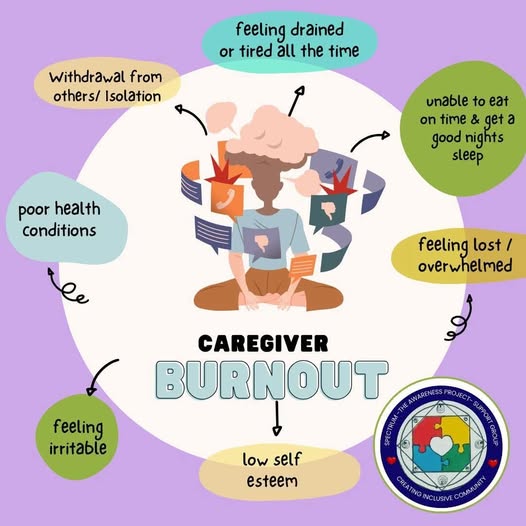
I did not truly realize how close I came to burnout until my son’s condition stabilized, and while we still awaited the call for a matching kidney, all the other surgeries were behind him, and his condition was in a management phase, I began to realize how anxious I was over even the smallest things. I would get so easily frustrated. I felt so tired all the time, even though I was getting more sleep than I had in the early days of struggling with the alarms of the dialysis machine. It was only in the absence of these things that I had chalked up to just a part of parenthood that I began to recognize I was running on fumes. I had nothing extra to put into things I enjoyed after working my day job, completing my homework and responsibilities as a graduate student, paying my bills and caring for my child. Burnout can sneak up on us, and it does not generally pick an ideal time to show up.

No matter how many identities and hats anyone wears, we all have the same number of hours in a 24-hour period, and as they say: you can’t pour from an empty cup. So how does a caregiver like me, or any other 1 in 5 adults refill our cups to ensure we have enough to keep showing up for our families, our loved ones, and, dare I say, for ourselves?
We do so intentionally. We find opportunities for joy, for self-care, and for recharging our proverbial batteries. We respect our limitations, and honor our minds, bodies, and souls using the tools we’ve added to our tool boxes. Whether it is mindfulness, breathing exercises, somatic practices such as yoga, walking, or swinging – there are many cost effective (or free!) ways we can regulate our nervous system.
We, as caregivers, must make the commitment to ourselves and those we love to utilize our toolboxes often, and to check in with ourselves to add self-care before our cups are completely empty.